Salvador Dalí painted The Persistence of Memory in 1931. Oil on canvas, twenty-four by thirty-three centimeters, about the size of a sheet of paper. It sold for two hundred and fifty dollars and now hangs in MoMA, and it is probably the most reproduced clock in history.
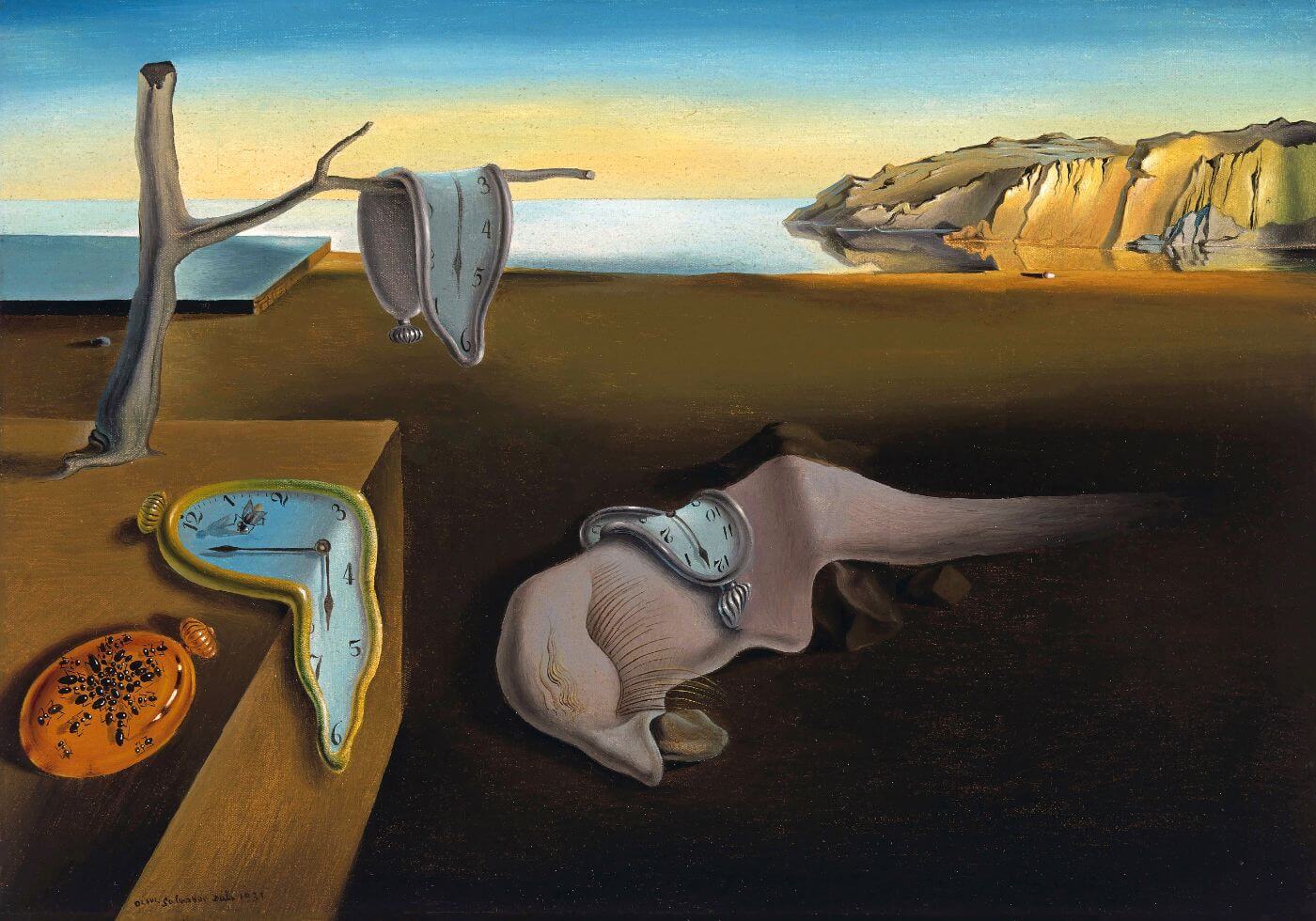
Everyone remembers the watches melting. Almost no one remembers the title. It does not say the persistence of time. It says the persistence of memory.
That is the whole trick, and it is the one your analytics stack gets backwards.
Your tools are hard clocks
Dalí had a private theory in those years: the difference between hard and soft.
A hard clock keeps perfect time. It is precise, confident, and it only knows the moment it is pointing at. In the painting there is exactly one hard watch. It sits closed in the corner, the color of an old coin, covered in ants. Dalí drew ants when he meant decay. The one timepiece that refused to go soft is the one rotting.
Open your stack and you are looking at a wall of hard clocks. The ad platform keeps perfect time on reach. The email tool keeps perfect time on opens. The calendar keeps perfect time on bookings. Each one is precise about its own slice and blind to every other. Each shows you the moment and remembers nothing before it.
You feel it the instant a date picker snaps back to the last seven days. The window moves, the number changes, last month is gone. The tool is a clock. It tells you now. It was never built to remember.
Marketing looks like a measurement problem. It is a memory problem.
Memory is the soft thing that lasts
What persists is not the clock, but the memory of what it was pointing at.
When a reporter asked Dalí whether the soft watches were about Einstein and relativity, he said no. He said they came from a wheel of Camembert melting in the sun. Not physics. Perception. The way a real afternoon actually sits in your head afterward, warped, out of order, keeping the parts that mattered and dropping the rest.
That is what a funnel is. Not a row of timestamps. A memory of one person moving: the ad they saw, the post they read three weeks later, the demo they booked and missed, the email that finally landed. No single clock holds that. It lives across all of them, in the order the person actually moved, which is the one thing none of your tools wrote down.
Marketing looks like a measurement problem. It is a memory problem. You do not need another precise clock. You already own twelve. You need the soft thing that persists across them after each one resets.
The clocks were never the point. Dalí knew it in 1931. The thing worth keeping is the memory they cannot hold.
Throughline reads across every tool you already pay for and narrates the part that moved. Early access is open.